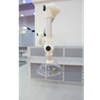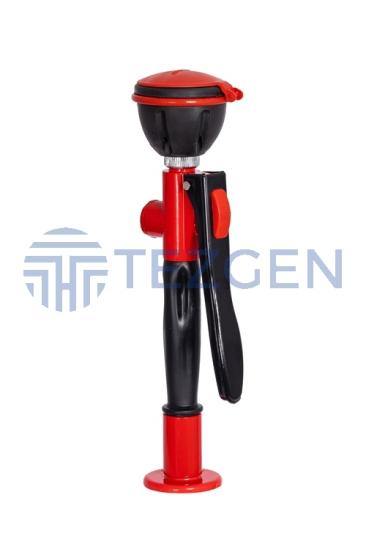
What is a Laboratory Emergency Shower System?
It is a safety equipment that provides a large and controlled flow of water to quickly reduce the harmful effects in case of contact of chemical substances with the body, eyes or face.
Purpose:
• To quickly dilute the chemical
• To minimize burns and tissue damage • To provide first aid until medical teams arrive
Types of Emergency Shower Systems
1-Body Shower (Emergency Shower)
• Used to wash the entire body
• Provides wide-angle water distribution from above • Generally operated with a pull handle / push handle
Area of use:
All laboratories where acids, solvents, and toxic chemicals are used
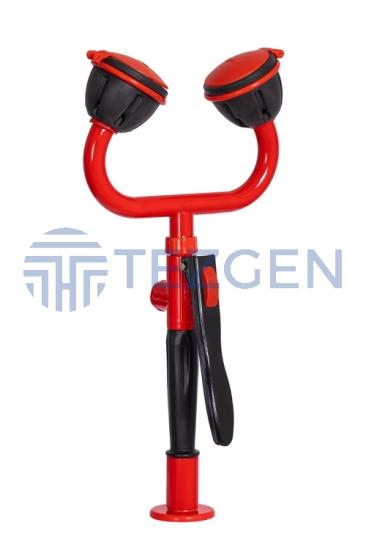
2-Eye and Face Wash
• Specifically for the eye and face area
• Low pressure, gentle flow • Designed not to irritate the eyes
Area of use:
Analytical, chemistry, biology, R&D, quality control labs
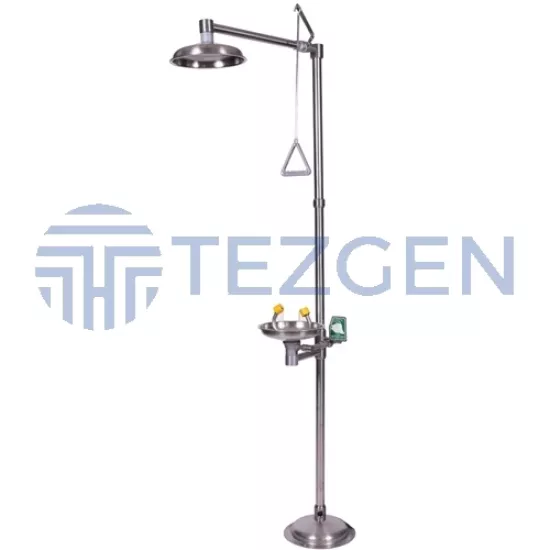
Combined Emergency Shower Systems
• Body shower + eye/face shower in one system • The most preferred model
3- Portable Emergency Showers
• Areas without fixed installations
• Construction sites, temporary laboratories
• Tank or pressurized systems Technical and Safety Criteria (Important ⚠️)
A good emergency Shower system:
• Must comply with ANSI Z358.1 and/or EN 15154 standards
• Must activate in less than 1 second
• Must provide continuous water flow for a minimum of 15 minutes
• Must be hands-free
• Must be corrosion-resistant (stainless steel / galvanized)
• Water temperature must be in the lukewarm (tepid water) range (≈ 16–38°C)
How should it be positioned in the laboratory? • Maximum 10 seconds' distance from chemical risk points
• The front must never be obstructed
• The floor must be non-slip
• It must have phosphorescent directional and warning signs
Which laboratories require it? • Chemistry laboratories
• Pharmaceutical & biotechnology laboratories
• Food analysis laboratories
• University and R&D centers
• Industrial process laboratories
• Laboratories within the scope of ISO 17025 / TÜRKAK