Lithium Battery Storage Cabinets:
A Comprehensive Guide to Safe Storage
Lithium batteries, an essential part of our electronic devices today, can pose serious safety risks if stored incorrectly. Storage cabinets specifically designed for safe battery storage have become a critical need in homes, offices, and industrial areas. In this guide, we'll cover everything you need to know about lithium battery storage cabinets.
Why Are Lithium Battery Storage Cabinets Necessary?
Safety Risks
Lithium batteries pose a risk of thermal runaway, fire, and even explosion when stored under improper conditions. Damaged, overcharged, or aged batteries, in particular, increase these risks. Professional storage cabinets minimize these risks and ensure safe storage.
Legal Requirements
Many countries and companies have mandated special safety measures and certified storage solutions for storing certain quantities of lithium batteries. These regulations are critical for both employee safety and environmental protection.
Features of Lithium Battery Storage Cabinets
Fire Resistance
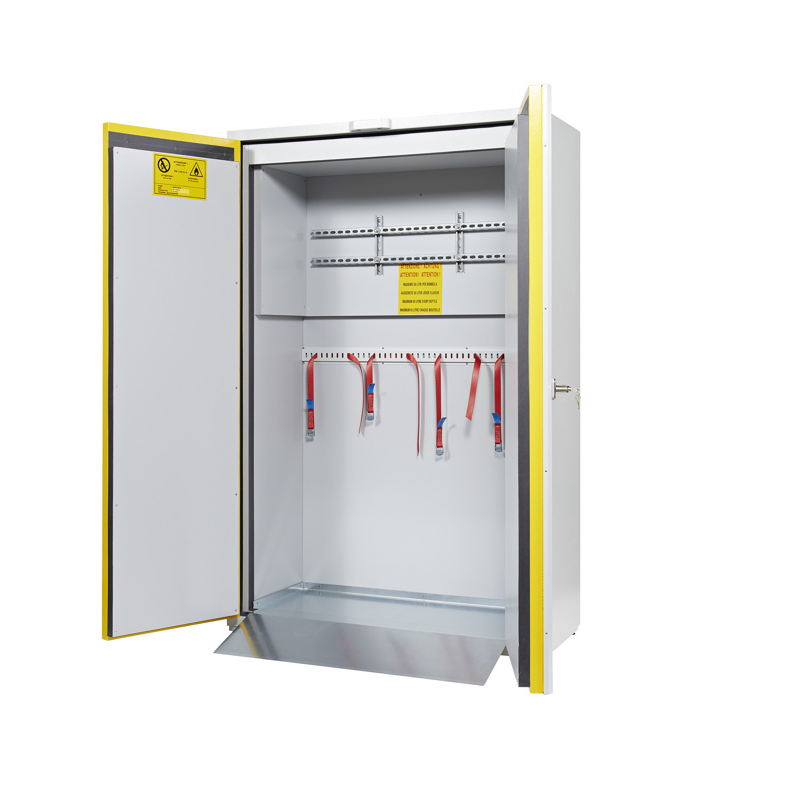
• Fire resistance class: Minimum 30-90 minutes fire resistance according to EN 14470-1
• Double-walled construction: Insulation material between interior and exterior walls
• Automatic closing doors: Self-closing mechanism in case of fire
Ventilation System
• Continuous air circulation: Prevents the accumulation of harmful gases
• Filtration system: HEPA or activated carbon filters (optional)
• Pressure balancing: Optimizes the internal and external pressure difference
Temperature Control
• Temperature monitoring: Digital thermometers and alarm systems
• Cooling systems: Active or passive cooling solutions
• Heat distribution: Special design for uniform temperature distribution
Criteria for Choosing the Right Cabinet
Capacity Calculation
Determine the appropriate capacity based on the number and size of batteries:
• Small-scale: Compact models for 50-100 AA/AAA batteries
• Medium-scale: Medium-sized cabinets for 500-1000 batteries
• Large-scale: Models with a capacity of 2000+ batteries for industrial use
Certification and Standards
• CE marking: European conformity standards
• UL certification: American safety standards
• ISO 14001: Environmental management system compliance
• ATEX certification: Explosive atmosphere protection
Installation and Placement Recommendations
Choosing the Proper Location
• Flat and solid ground: Vibration-free, stable surface
• Ventilation: Locations near natural airflow
• Away from heat sources: Radiators, sunlight, electrical appliances
• Accessibility: Easy access in emergency situations
Environmental Factors
• Humidity control: Ideal humidity level of 45-65%
• Temperature range: Optimal between 15-25°C
• Vibration: Minimum vibration environment
• Electromagnetic fields: Away from strong magnetic fields
Usage and Maintenance Recommendations
Daily Usage Practices
• Regular Inspection: Visual inspection at least once a week
• Temperature monitoring: Daily temperature records (can be done with external thermometers)
• Cleaning: Monthly interior and exterior cleaning
• Inventory management: Keeping entry and exit records
Periodic Maintenance
• Filter replacement: Filter replacement every 3-6 months (for models with filters)
• Seal inspection: Regular inspection of door seals
• Electrical inspection: Annual inspection of electrical connections
Emergency Procedures
• Fire alarm protocol: Emergency action plan
• Evacuation procedure: Personnel safety prioritized procedures
• Communication plan: Communication with fire department and emergency services
• Damage assessment: Post-incident security check
Cost and Investment Evaluation
Initial Investment Cost
When budgeting for a quality lithium battery storage cabinet, consider the following factors:
• Capacity: Larger capacity models reduce unit cost
• Features: Advanced features increase cost
• Brand: Well-known brands generally have higher prices
• Certification: Multiple certifications affect cost
Long-term Long-Term Benefits
• Insurance benefits: Proper storage can reduce insurance premiums
• Legal compliance: Minimizes fines and audit risks
• Asset protection: Extends battery life and maintains performance
• Occupational health: Improves employee safety
Popular Brand and Model Recommendations
Entry-Level Models
Affordable options with basic safety features, suitable for small businesses and home use. These models typically offer 30-minute fire resistance and a basic ventilation system.
Mid-Segment Models
Models offering advanced safety features and extended fire resistance (60 minutes) are ideal for medium-sized businesses. They include a digital control panel and alarm systems.
Premium Models
Models designed for industrial use and high-capacity storage, featuring 90-minute fire resistance and fully automated control systems.