







The next generation of photometers: PrimeLab 2.0, launched by Water-i.d. Highly accurate readings at 18 parallel wavelengths, Bluetooth-USB-WiFi-4G* connectivity, powerful software and app synchronised via a cloud service, a large HD touchscreen and the option to connect test probes are just some of the features of the new PrimeLab 2.0, which replaces the well-established PrimeLab 1.0 launched in 2013.
| Dimensions | 10 cm x 25.5 cm x 5.9 cm (width x length x depth) |
| Weight | 715 g |
| Spectral range | 390 nm – 950 nm, 18 wavelengths with peaks at 410/435/460/485/510/535/560/585/610/645/680/705/730/760/810/860/900/940 nm; 180° and 90° set-up for direct and indirect measurement |
| Parameters | More than 140 parameters (flexible set-up); user-defined parameter function |
| Electrodes | USB Type-C connector for pH/EC/TDS/ORP/temperature probes |
| Connectivity (hardware) | Bluetooth 4.2, WiFi, USB (Type C), 4G* (via USB modem) |
| Connectivity (software) | LabCOM software (Windows / Mac), LabCOM app (Android / iOS), LabCOM Cloud (web browser) |
| Display | 5.5" colour HD touchscreen |
| Camera | Built-in barcode / QR code scanner |
| Calibration | Certified auto-calibration function (software) |
| One-Time-Zero | Smart OTZ (One-Time-Zero) function with recognition of ZERO types |
| Internal memory | >5,000 |
| Clock / date | RTC (real-time clock) with calendar function |
| Auto-off | Factory default = 10 minutes; individual adjustment possible |
| Menu guidance | Intuitive, display-controlled 4-button menu guidance; test instructions during the measuring process |
| Power supply | 8,400 mAh lithium-ion battery |
| Languages | >15 |
| Environment | 5 °C – 45 °C / 30–90% relative humidity |
| Water resistance | Splash-proof (IP54) |
| Reagents | Calibration curves for individual parameters / measuring procedures are set to the reagents supplied by Water-i.d. Using reagents from other manufacturers may lead to incorrect readings / higher tolerances. PrimeLab reagents are entirely 'Made in Germany' or 'Made in UK'! |
UV – VIS – IR peaks at:
| 410 nm | 435 nm | 460 nm | 485 nm | 510 nm | 535 nm |
| 560 nm | 585 nm | 610 nm | 645 nm | 680 nm | 705 nm |
| 730 nm | 760 nm | 810 nm | 860 nm | 900 nm | 940 nm |
While normal photometers perform tests at only one selected wavelength, PrimeLab 2.0 acquires data from 18 different wavelengths in parallel with every measurement, covering essential parts of the UV and IR spectrum and the entire VIS range. Three sensors with 6 wavelengths each are interconnected. The corresponding LEDs are set at 180° and 90° to also enable NTU turbidity, PTSA and fluorescein measurements. Very narrow peaks between 390 and 950 nm provide highly accurate readings, similar to the performance of a spectrophotometer. While the highly professional PrimeLab 2.0 firmware interpolates between different wavelength readings, the parameter curves are set to use several wavelengths to obtain the most accurate test results.
PrimeLab 2.0 features a state-of-the-art 5.5-inch colour HD touchscreen. The large screen offers an excellent overview of all essential information such as battery status, Bluetooth, WiFi and 4G* connection, and gives maximum flexibility to arrange icons just as on your smartphone. Each parameter method comes with step-by-step instructions in many different languages, useful animations and links to user videos, ensuring the correct procedure is followed so that the result is accurate and precise. With the large 5.5-inch screen you no longer need to connect to the phone app (this is still available if you prefer). All data can easily be managed on PrimeLab 2.0.

With its built-in camera, PrimeLab 2.0 can scan barcodes and QR codes to identify user-defined Accounts (water sites or locations) and to identify reagents by the barcode/QR code on the package. The advantages are significant: scanning the barcode/QR code of a water site ensures that test results are always linked to the correct Account. As the relevant Account is selected automatically and ready for the next measurement, the test process is shortened considerably. Scanning the barcode/QR code on the reagent package prevents the use of wrong or even expired reagents, speeds up the test process by preselecting the parameter method and makes it ready for the next measurement.

PrimeLab 2.0 offers the option to connect test probes such as those used for pH, EC, TDS, salinity, ORP and temperature. The connection is made with a USB Type-C cable with an A/D converter box. By connecting the probes to PrimeLab 2.0, the photometer manages the probe and obtains readings that can be stored under user-defined Accounts (water sites) and synchronised with LabCOM Cloud (optional). PrimeLab 2.0 uses the highest-quality probes. Adapters for different vials: PrimeLab 2.0 uses 24 mm glass vials, 16 mm glass vials and 1 ml Eppendorf vials. The vial adapter can easily be exchanged with a simple built-in bayonet lock.

Over time, water testing has become much more than just testing. Real-time availability of reliable test results and data management are as important as the test result itself. PrimeLab 2.0 is top of the range for connectivity! Bluetooth, WiFi, USB (Type C) and 4G* are available as multiple options for connecting PrimeLab 2.0 to a smartphone, tablet, computer or directly to LabCOM Cloud. Whether tests are carried out in a laboratory, on site, on a ship or at a cooling tower – virtually anywhere – data can be transferred easily and automatically.
More than 140 different parameter methods to choose from! For almost twenty years Water-i.d. has developed reagents and photometer curves for more than 140 different parameter methods. Like PrimeLab 1.0, PrimeLab 2.0 offers water testing solutions for many different industries, testing virtually every parameter from A for alkalinity to Z for zinc. All PrimeLab 2.0 parameter curves are calibrated to quality reagents developed and manufactured in Germany and the UK. Users can also define their own curves using all 18 wavelengths and store them on PrimeLab 2.0!
| Item code | Item description |
|---|---|
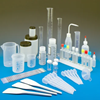
| Vials and measuring cups | |
| PLSp-Kv2410-10 | Set of 10 x 24 mm (10 ml) round glass vials with lid / light shield integrated in lid |
| PLSp-Kv1610-10 | Set of 10 x 16 mm (10 ml) round glass vials with lid |
| PLSp-Kv1-100 | Set of 100 x 1 ml Eppendorf vials |
| PLSp-LG-ELF10 | Set of 10 x 60 ml measuring cups with red lid |
| SVZdev100 | 100 ml plastic measuring cup |
| PLSp-GlsBot50ml | 50 ml glass bottle with stopper |
| Dosing equipment | |
| PLSp-inj1 | Graduated plastic syringe (10 ml) |
| PLSp-inj03 | Graduated plastic syringe (3 ml) |
| PLSp-inj01 | Graduated plastic syringe (1 ml) |
| PLSp-PIP10ml | 10 ml pipette (variable volume 1–10 ml) |
| PLSp-PIP10ml-tips10 | 10 tips for PLSp-PIP10ml pipette |
| PLSp-PIP1ml | 1 ml pipette (variable volume 0.1–1 ml) |
| PLSp-PIP1ml-tips10 | 10 tips for PLSp-PIP1ml pipette |
| PLSp-PIP01ml | 0.1 ml pipette (variable volume 0.01–0.1 ml) |
| PLSp-PIP01ml-tips10 | 10 tips for PLSp-PIP01ml pipette |
| Filter utilities | |
| PLSp-InjFil-1 | Luer lock syringe (20 ml) with thread for filter holder |
| PLSp-Filtad1 | Filter holder for PLSp-InjFil-1 luer lock syringe |
| PLSp-FiltGFC | 25 mm GF/C filter, bottle of 50 filter papers |
| PLSp-Filt45M | 25 mm 0.45 µm filter, bottle of 50 filter papers |
| Stirring rods / cleaning brushes | |
| SPstr10 | Set of 10 x 13 cm plastic stirring rods |
| PLSp-str10 | Set of 10 x 10.5 cm plastic stirring rods |
| SPclb10 | Set of 10 x 9.5 cm vial-cleaning brushes |
| Electronics | |
| PLSp-CODheatblock-T | Water-i.d. Thermo-Reactor 1.0 for heating 16 mm glass cuvettes: insert for 12 x 16 mm cuvettes; 3.5-inch colour touchscreen with 480 x 320 resolution; icon-based touch menu; temperatures 70 / 100 / 120 / 148 / 150 / 160 °C and user-defined temperature; warm-up from 20 °C to 160 °C within 15 min; predefined heating times of 30, 60, 90 and 120 min |